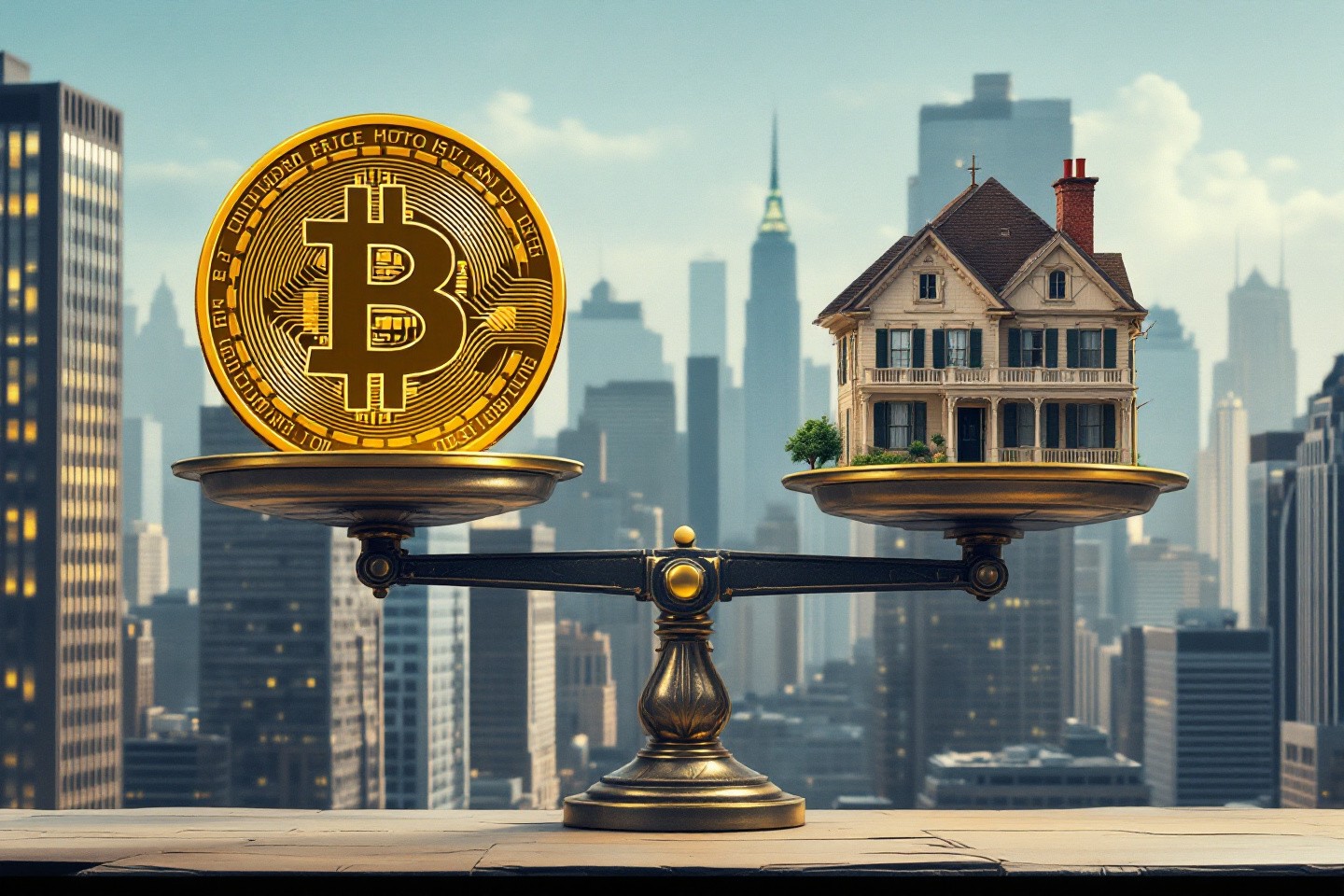
The beginning of Tokenized Real Estate
It is not just you who have ever felt like you could invest in prime real estate just like you would invest in stocks or crypto. Real estate had always been profitable–but costly, time-consuming and one-of-a-kind. Go tokenized real estate, a blend of blockchain technology and property ownership that is said to be a rewrite to the rules. The question many people are asking, as we enter 2025, is; is it simply crypto hype, or a real paradigm shift in the way we own property? In plain English, let us have it unwrapped.
What Does It mean in a simple sense by tokenization?
The idea of tokenizing a real thing, such as a building is nothing more than a fancy term to describe how to represent the real idea on blockchain.
Imagine it was a slice of a pizza cut into thousands of small pieces.
- A share of ownership is denoted by a slice (token).
- You do not even have to purchase the entire pizza to have a bite.
The reason why Real Estate was waiting to be disrupted
The old way of investing in property is like struggling to move a cruise ship; it is tiresome, costly, and riddled with paper work.
Real estate was an ideal choice of disruption due to:
- High entry costs
- Illiquidity
- Dependence on middlemen
How tokenized real estate works in reality
Fundamentally, tokenized real estate connects the physical realms to the digital infrastructure.
- An asset is legally established—usually through an SPV (Special Purpose Vehicle)
- Blockchain tokens depict the right to ownership
The use of blockchain in ownership of property
Blockchain is the ledger that is transparent and non-alterable:
- All transactions are publicly registered
- No backroom deals
- No “trust me, bro.”
- Just math and code
Introduction to Smart Contracts — A Beginners Guide
Smart contracts are self-executing deals:
- When X occurs → Y is ensured
- Rent comes in? Profits get distributed
- Tokens sold? Ownership updates in real time
- No attorneys chasing signatures
Digital Shares and fractional ownership
Fractional ownership lets ordinary people own parts of high-value real estate:
- Office buildings
- Hotels
- Luxury condos
- All for as little as a few hundred dollars
The reason behind 2025 being a cruxible year of tokenized real estate
Tokenized real estate is not new — but in 2025:
- Tech is mature
- Investors understand it
- Regulators are catching up
Market maturity and institutional adoption
Large players are stepping in:
- Asset managers
- REITs
- Banks
Where institutions go → liquidity and legitimacy follow.
Regulatory developments worldwide
Regulations are uneven but advancing quickly.
- Switzerland
- Singapore
- UAE
- EU regions
The fog is clearing—and capital hates uncertainty.
Retail investors now have a chance to invest without significant risks
The benefits are hard to ignore.
Shore-up of Liquidity in a Traditionally Illiquid Market
- Selling a house takes months
- Selling a token takes minutes
- Secondary markets make real estate liquid
Lower Barriers to Entry for Retail Investors
- No six-figure down payment
- No bank rejection
- Real estate becomes democratized
Global Property Market Accessibility
Want exposure to:
- Tokyo offices?
- Dubai luxury apartments?
Just click buy.
Risks and Challenges You Should Know
Regulatory Uncertainty and Compliance
- Laws vary by country
- Security tokens must meet strict rules
- Weak platforms can destroy investor trust
Technology and Security Risks
- Bugs in smart contracts
- Wallet hacks
- Blockchain is secure; surrounding tools still evolving
Investor Awareness and Education
- Crypto moves fast
- Real estate moves slow
- Education prevents panic-selling
Traditional vs. Tokenized Real Estate Investing
Speed, Cost, and Transparency
Token deals are:
- Faster
- Cheaper
- More transparent
Fewer intermediaries = fewer fees.
Regulatory and Administrative Control
Traditional owners have more control:
- Token holders usually get voting rights
- But they don’t get physical keys
Most significant platforms and projects to watch in 2025
What Are Real Estate Security Tokens?
These are regulated tokens backed by real assets.
- Pay dividends
- Represent equity
- Follow securities laws
- Where institutional investors feel safe
DAO-based Property Ownership Models
DAOs allow communities to co-own and manage real estate:
- A digital co-op
- Powered by code
Applications beyond residential properties
Commercial and Industrial Real Estate
- Warehouses
- Office parks
- Logistics centers
Great for tokenization due to predictable cash flow.
InsurTech 2025: The Top Technology Trends to Watch
Hospitality, Hotels, and Resorts
Communal ownership allows people to earn from:
- Resorts
- Hotels
- Tourism properties
Without operational headaches.
Who should consider tokenized real estate?
Retail Investors
Perfect if you want:
- Passive income
- Diversification
- Real estate exposure with low capital
High-Net-Worth Individuals and Institutions
Benefits include:
- Faster settlement
- Global diversification
- Operational efficiency
The Future Perspective: Hype or Long-term Transition?
Tokenized real estate is unlikely a trend.
It resembles early internet — clunky at first, inevitable long-term.
Adoption Curves and Network Effects
- More tokenized properties → more liquidity
- More liquidity → more adoption
- A powerful flywheel effect
Conclusion
In 2025, tokenized real estate sits at the intersection of:
- Technology
- Accessibility
- Finance
It’s not replacing traditional real estate overnight — and it doesn’t have to.
It is redefining who can invest, how they invest, and how much they need to begin.
Crypto curious, real estate enthusiasts, or simply observers — this is a trend worth watching.
FAQs
1. Is tokenized real estate legal in 2025?
Yes, in many jurisdictions—especially where security token regulations are clearly defined. Always check local laws.
2. Can I earn rental income from tokenized properties?
Absolutely. Many platforms distribute rental income proportionally to token holders.
3. How is tokenized real estate different from REITs?
Tokenized real estate offers direct blockchain-based ownership, faster settlement, and often more transparency than REITs.
4. What blockchain is commonly used for real estate tokenization?
Ethereum and Polygon dominate, but other chains like Avalanche and Stellar are gaining traction.
5. Is tokenized real estate suitable for beginners?
Yes—if you start small, use reputable platforms, and understand both crypto and real estate basics.
xplore blockchain-based real estate deals, smart contracts for property, fractional ownership — benefits and risks. Datacenters+1