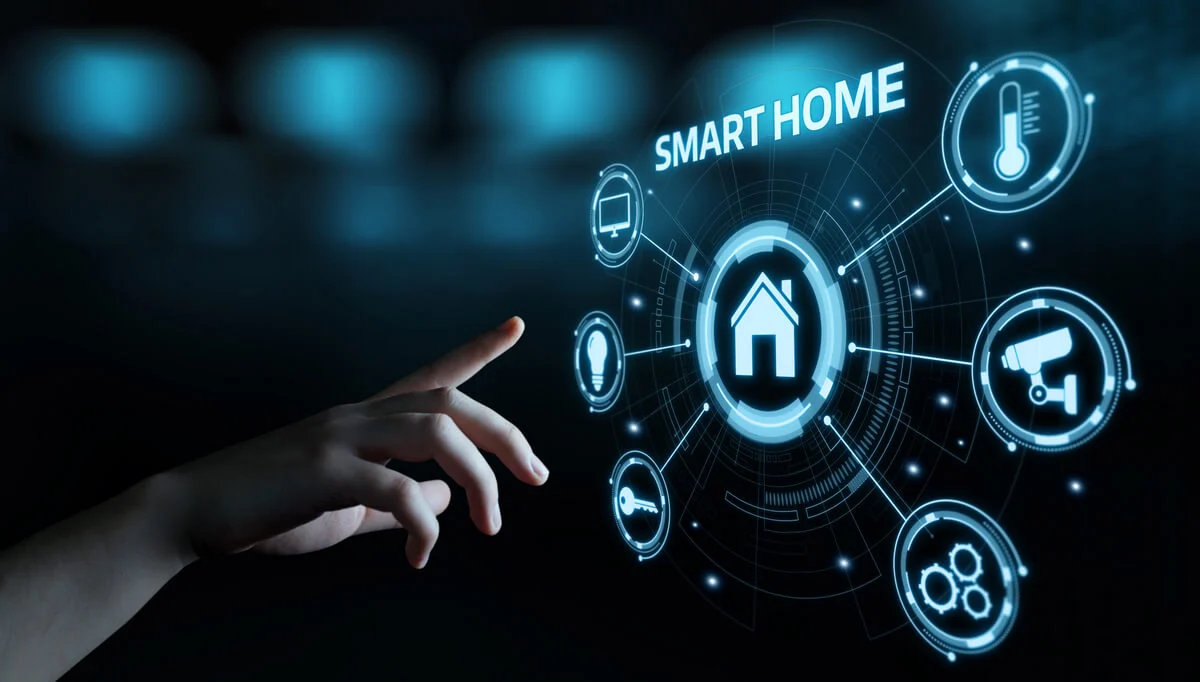
Smart Homes 2025: 5 Large IoT Upgrades +1 to Increase Real Estate Value
The real estate business is changing at a pace that it has never changed and the smart home technology is not a luxury anymore, it is becoming a norm. The upgrades of properties with Internet of Things (IoT) are more expensive, sell faster, and have more qualified buyers in 2025. Smart homes are transforming the world of human habitation, as well as how investors assess the value of property, thanks to the use of AI to control climatic conditions and create predictive security systems.
This is a long-form information guide on which we are going to delve into the top five major IoT upgrades that are greatly increasing real estate value in 2025. You will know why these technologies are significant, what changes their influence on the psychology of buyers, and what makes a smart home really future-proof. You, as a homeowner, developer, real estate investor, or someone merely interested in knowing what will happen in the housing sector, will find this article interesting enough to be practical, hopefully aided by search engine optimization.
InsurTech 2025: The Top Technology Trends to Watch

The Emergence of Smart Homes in the New Real Estate
Smart houses are not the current hype, but a change in the nature of housing demands. Buyers are now more techno savvy, energy conscious and security conscious than ever before. A house with its own brain is no longer considered futuristic, it is considered a practical thing to do.
What’s driving this shift?
- Remote lives require enhanced connectivity.
- The increasing energy prices drive consumers to efficiency.
- There is a growing demand of smarter security that comes with urbanization.
- Automated living features are beneficial to the aging populations.
By 2025, it is no longer a luxury home that has implemented smart home. IoT systems are also becoming a standard feature of mid-range and even entry-level homes, and technology is becoming a fundamental value driver in real estate.
Learning about IoT: The Smart Homes Foundation
It is necessary to find out what IoT (Internet of Things) is before delving into the actual upgrades in as far as the housing is concerned.
IoT describes a system of interconnected devices, such as sensors, appliances, systems and software that collect and exchange information in real time. IoT devices in smart homes interact with one another to perform an action automatically, maximize functionality and comfort the user.
The most important features of the IoT-powered homes are:
- Automation (Light, climate, security)
- Smartphone or voice control.
- Energy and maintenance decision making.
- Anticipatory behavior on the basis of user behavior.
It is this interrelationship ecosystem that provides the five potent upgrades we are about to discuss.
History of smart home from 1963 – 2025: Milestones
History of smart home from 1963 – 2025: Milestones
The reason why Smart Home Upgrades are worth more to real estate
The features of smart homes are not just convenient, but they add to the value that can be quantified and sold. Research always demonstrates that homes which have developed technology:
- Sale faster than conventional homes.
- Higher asking prices by the command.
- Prosper in younger, better-income buyers.
- Cut down long term repair and utility expenses.
In the case of a buyer, smart upgrades minimize uncertainties. In the view of an investor, they maximize ROI. And as an appraiser they are the kind of improvements that are salient to inflate valuations.
At this point we will deconstruct the five largest IoT upgrades that will have the greatest impact in 2025.
Upgrade 1: Intelligent Smart Climate Control Systems
Climate control has developed much more than a mere programmable thermostat. One of the most useful upgrades of smart homes in 2025 will be AI-powered HVAC systems.
How AI Climate Systems Work
These systems are IoT-based, machine-learning-based, and real-time data-driven systems that:
- Learn occupant preferences
- Set temperatures automatically.
- Predict weather changes
- Optimize energy usage
Why Buyers Love It
- Lower energy bills
- Consistent comfort
- Minimal manual input
- Eco-friendly living
Upgrade #2: Smart Security and Surveillance Systems
Security has been a selling point in the real estate property, but smart security systems take it a notch higher. Buyers anticipate integrated, predictive and AI enhanced security solutions in 2025.
What constitutes an intelligent security system
- Facial recognition smart cameras.
- Behavior analysis motion sensors.
- Basic access logs and door locks which are automated.
- Live notifications and surveillance.
Real Estate Value Impact
- Appeal to professionals and families.
- Reduce insurance costs
- Enhance perceived safety of the neighborhood.
Upgrade 3: Intelligent Energy Management and Solar Thoroughbred
One of the most powerful value drivers of 2025 real estate is energy efficiency. IoT energy management systems have become a standard in smart homes which are much more than regular solar panels.
The major elements of Smart energy systems
- Real-time energy monitoring
- Automated load balancing
- Smart solar inverters
- Integration of battery storage at home.
Why This Increases Property Value
- Reduced amount of monthly expenses appeal to low-end consumers.
- Sustainability will attract green sensitives.
- Long term resilience is brought by energy independence.
Upgrade 4: Automated and Voice-Activated Interior Living
Voice assistants and automation have been the focus of the interaction between individuals with their houses. Smart homes provide voice-first control over various systems in 2025.
What comes with advanced interior automation
- Lighting and blinds which are controlled by voice.
- Automated kitchen appliances.
- Intelligent entertainment systems.
- Lifestyle personalized scenes.
Lifestyle Appeal for Buyers
Robotic interiors make a perception of new luxury and comfort, which directly affects the notion of perceived value and willingness to pay more by buyers.
Upgrade number 5: Smart Infrastructure and Predictive Maintenance
Predictive maintenance is one of the least recognized and strongest IoT upgrades. Smart homes can now be able to check their structural and mechanical health.
The Operation of Predictive Maintenance
IoT sensors track:
- Water leakage and pressure of pipes.
- Functioning of the electrical systems.
- Appliance wear and tear
- Organizational changes or accumulation of moisture.
Why It is a Game-Changer in Real Estate
- Minimises unplanned maintenance expenses.
- Secures property worth in the long run.
- Begging the investors and landlords.
- Builds trust with buyers
What Smart Homes Will do to Buyer Psychology in 2025
Homes that are technologically operated provide:
- A sense of control
- Reduced stress
- Increased safety
- Future readiness
Smart Homes and Appraisal What is the most important?
Appraisers focus on:
- Permanence of the upgrade
- Assimilation into the domestic setup.
- Energy and cost-saving data
- Demand of the feature in the market.
Future-proofing Real estate with scalable intelligent technology
Smart homes in the future will include:
- Modular systems
- Software-based updates
- Cross-platform compatibility
- Effective cybersecurity systems.
Ways that Homeowners Mess Up Smart Upgrades
Common pitfalls include:
- Installation of incongruent devices.
- Complexifying user interfaces.
- Ignoring cybersecurity
- It is a matter of preference to select gimmicks, not function.
The use of Smart Homes in Rental and Investment Property
Smart technology properties:
- Command higher rents
- Attract longer-term tenants
- Reduce landlord workload
- Lower operational costs
Summary: The Future of Smart Homes is Rewriting the Real Estate Value in 2025
Smarter homes in 2025 will not be about fancy appliances, but rather smart living, functionality, and sustainability. The five key IoT upgrades discussed in this paper, including AI climate control, smart security, smart energy management, automated interior environments, and predictive maintenance, are reinventing what customers want and what investors focus on.
With the increase in competitiveness and the use of technology in the real estate, any property that adopts such technologies sells quicker and provides enhanced returns.